

Authentic and fast
Bought property in Ernakulam. Landeed confirmed Pokkuvaravu was pending — saved me from paying without record update.
Anil V.2 months ago

Bought property in Ernakulam. Landeed confirmed Pokkuvaravu was pending — saved me from paying without record update.
My grandfather's land had no Pokkuvaravu after his death. Landeed's report helped us file the inheritance mutation cleanly.
Used Landeed to verify mutation for a Kottayam plot. Soft and hard copies both delivered.
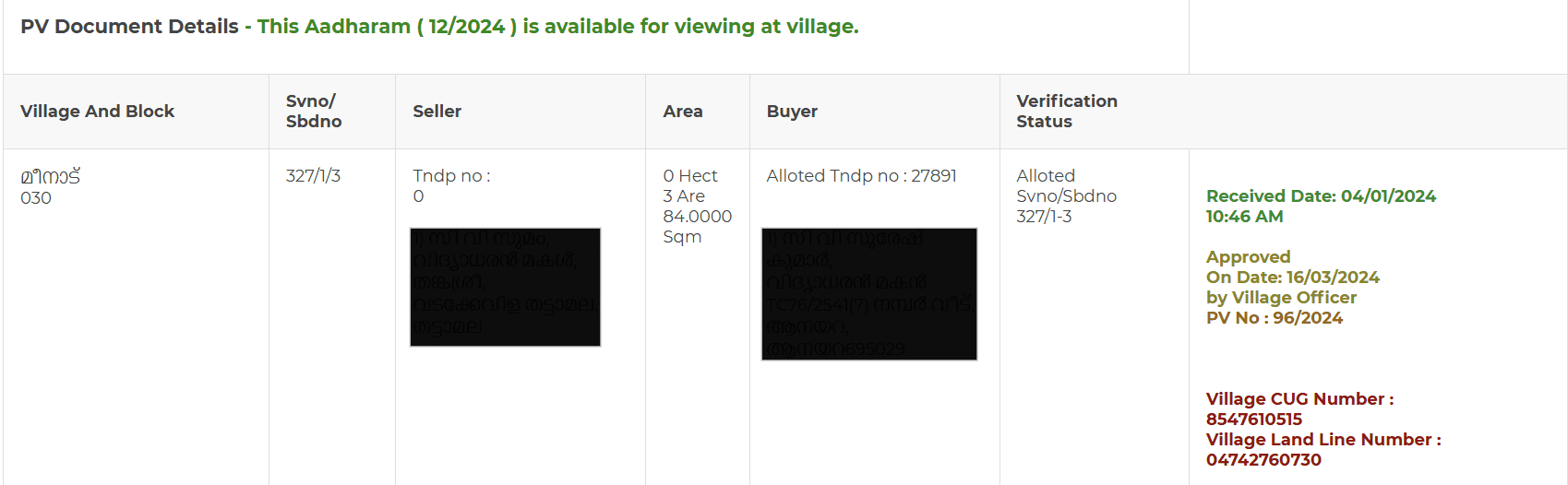
Pokkuvaravu is the Malayalam term for mutation — the formal update of Kerala's village land register (Thandapper) when ownership changes through sale, gift, inheritance, partition, or court order. It is the post-sale step that links the registered sale deed to the Revenue Department's village records.
District, Taluk, and Village (mandatory), then Survey number with sub-division — or Block/LP number for Re-Surveyed villages — plus the Thandapper number, sale deed reference, or owner name.
Current and pre-mutation Thandapper holders, Survey/Block with area, land classification, sale-deed reference (SRO, doc number, year), mutation date and Tahsildar/Village Officer reference, and any pending Pokkuvaravu applications.
The sale deed is the legal transfer document registered at the Sub-Registrar. Pokkuvaravu is the Revenue Department's mutation — it updates the village land register (Thandapper) with the new owner's name. Until Pokkuvaravu is done, the village records still show the old owner even after sale-deed registration.
Typically 30–90 days from application. Delays happen when the sale chain is incomplete, signatures from co-owners are missing, or there are objections from neighbours / co-claimants.
Thandapper is Kerala's village land register account — the record of who owns each parcel in a village. Pokkuvaravu updates the Thandapper when ownership changes. The Thandapper number identifies the account.
Older records use Survey No + Sub-Division (e.g. 123/2). Kerala's Re-Survey introduces Block No + Land Parcel (LP) numbering with GPS-based polygons. Both refer to the same physical plot; some villages have completed Re-Survey, others still use the older numbering.
Yes. Aggrieved parties — co-heirs, prior buyers, claimants — can file objections during the public-notice period and after the order is passed. Appeals lie with the Revenue Divisional Officer (RDO) and the District Collector.
Effectively yes for any practical use of the land — bank loans, name-change in property tax, applying for building permission, or sub-sale all require the buyer's name to be on the Thandapper. Skipping Pokkuvaravu creates a gap between registered title and revenue records.
Yes — the report includes the current status of any pending application linked to the property, the village officer in charge, and any objections filed.

