

Essential for ancestral property
Found old records of my grandfather's land. Very helpful for inheritance matters.
Rajasthan User1 month ago
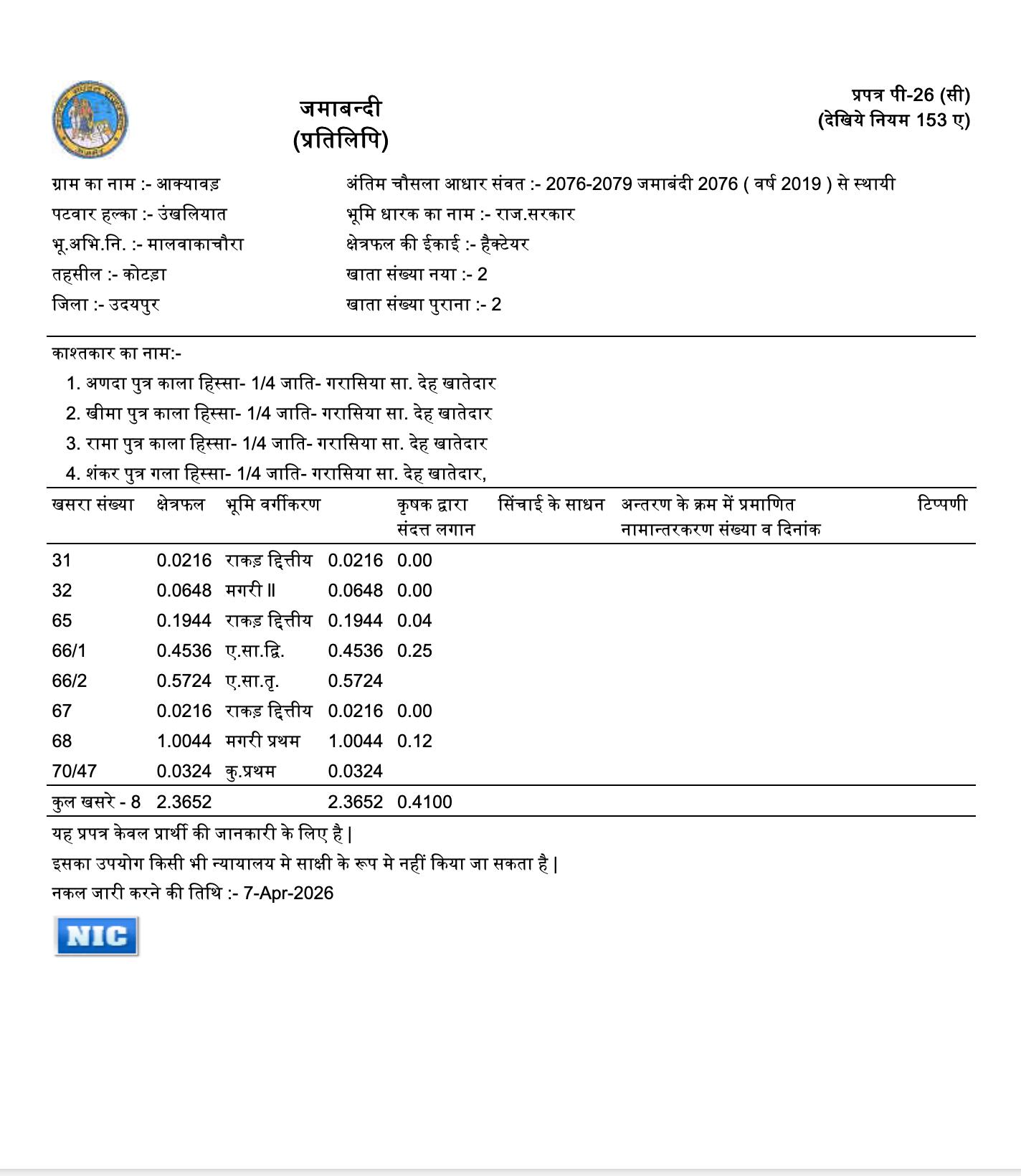

Found old records of my grandfather's land. Very helpful for inheritance matters.
Old Jamabandi refers to historical land revenue records maintained by the Revenue Department of Rajasthan. These are archival records that document land ownership, boundaries, and revenue assessments from previous decades. They are crucial for establishing long-term ownership history and resolving disputes related to ancestral land.
Old Jamabandi records are essential for tracing ownership history of ancestral property, resolving inheritance disputes, verifying land boundaries that may have changed over time, supporting legal claims in court proceedings, and establishing continuous ownership for land title insurance or due diligence purposes.
An Old Jamabandi contains details including: khata number, khasra number, land area measurements, owner names at that time period, land classification, crop patterns recorded historically, revenue assessments, and boundary descriptions. It provides a snapshot of land records from the recorded time period.
Khata number is the account number assigned to a landowner in revenue records, while Khasra number is the unique plot or survey number assigned to a specific piece of land. If you know the historical owner's account number, search by Khata. If you know the specific plot number, search by Khasra.
Old Jamabandi records in Rajasthan can date back several decades, sometimes to pre-independence era depending on the district and village. The availability of records varies by location, but they generally cover historical periods before the current digitized land records system was implemented.
Yes, Old Jamabandi records are admissible as evidence in legal proceedings. They carry significant evidentiary value in establishing historical ownership, inheritance claims, and boundary disputes. Courts often refer to these records when adjudicating land-related cases involving ancestral property.
Old Jamabandi represents historical land records from previous settlement operations, while current Jamabandi reflects the latest ownership and land details. Old records are archival and may not reflect subsequent mutations, sales, or divisions that have occurred since then. Both should be examined together for complete ownership history.
When reviewing Old Jamabandi for property purchase, verify: the chain of ownership from historical owner to current seller, consistency of land area across old and new records, any historical encumbrances or disputes noted, boundary descriptions that match current surveys, and that all inheritances and transfers are properly documented.

